 Cove
Your digital assets, protected.
A self-custody wallet that's simple from the first tap and secure by default. Everyday money on your phone, savings on your Cove Card, and Cove Shield checking every payment before you send it.

Set up in minutes. No account, no email, no forms.
Cove asks for nothing about you. Install it, write down one key, choose a PIN, and you're ready.
Install and create
Your wallet's keys are made on your phone and locked by its secure chip. They never leave it, and Cove never sees them.
Write down the Cove Key
Your recovery key as 12 short rows, each with its own check, instead of 24 long words. Less to write, fewer mistakes. It still works as 24 words in other wallets.
Choose your Cove PIN
On a keypad that moves every time, so nobody learns it by watching. Your fingerprint or face confirms every payment.
The safe choice is already made.
Most wallet losses come from one wrong tap. Cove removes the dangerous options instead of warning you about them.
Pay only people you saved
Cove sends only to contacts you chose, so a pasted look-alike address can't slip through.
Every address checked
Cove Shield checks an address before you can save it, and again before you sign.
Keys in secure hardware
Locked in your phone's secure chip, opened only by your Cove PIN plus your fingerprint, face or screen lock.
Every word means what it says
Your phone's own approval sheet shows exactly what will be signed, in plain words, with the full address.
No risky settings to get wrong
Rippling stays off on your tokens, unreviewed tokens stay hidden, and secret screens can't be captured.
Locks itself
As soon as you leave the app, and after a quiet spell you choose. Lock now is always one tap away.
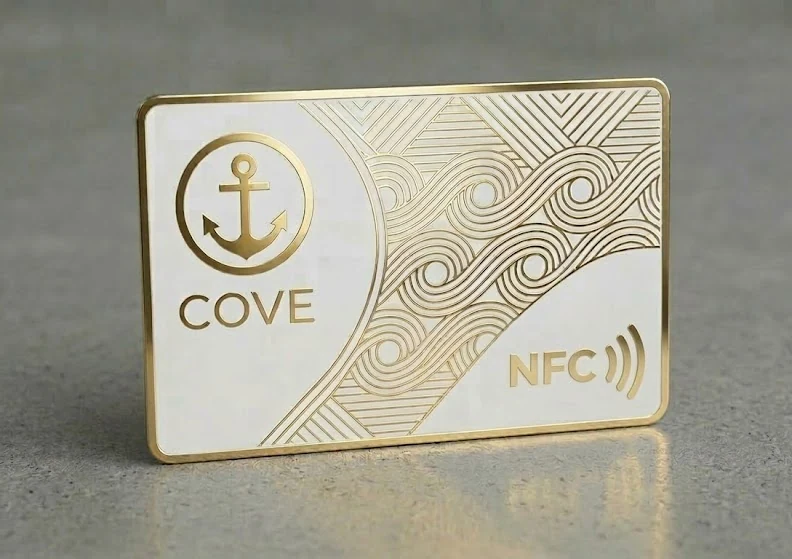
Savings on a card in your pocket.
Save, your savings account, needs two keys of three: your Cove Card, your phone, and your written Save recovery key. Every day that's one tap of the card.
- A stolen card can't empty Save, even with its PIN. Nor can a stolen phone.
- Lost your phone? Tap your card on a new one and everything in Spend comes back; Save too, with your Save recovery key.
- Lost your card? Your phone and your Save recovery key bring Save home.
- No battery, no screen, no firmware updates. The same kind of secure chip as a bank card.
Put your assets to work, without handing them over.
Trade on the XRP Ledger's own exchange, straight from your wallet. Nothing is deposited with Cove or anyone else.
- Trade tokens Cove has reviewed, with the order book and recent prices.
- Swap in one step from Home, with 25%, 50%, 75% and Max shortcuts.
- Earn a share of trading fees from liquidity pools. Est. APR is measured by Cove from each pool's recent fees.
- Cove Star highlights the deepest markets from issuers Cove has reviewed. A highlight, not advice.
- One clear fee: 0.5% of the XRP side of trades, swaps and pool moves, always shown before you confirm. Sending and receiving never pay it.
Screens are illustrations; figures are examples.
Protection for the day someone comes for you, not just your phone.
Thieves don't only hack phones. Cove plans for coercion and for the people you'd want to help.
A co-signer you trust
Add a partner, relative or adviser who must also approve anything leaving Save. They use Cove on their own phone, scanning a code: multi-signature without extra devices, and nothing passes through a server.
- Held for 3 days. Money leaving Save waits 3 days after your co-signer approves, and they can cancel it. One call stops a forced transfer.
- A backup co-signer for when yours can't be reached, and to settle Save for your family if you can't.
- Always needed. Your card and your Save recovery key together can't remove them.
A duress PIN
A second PIN opens a small, separate wallet. If someone forces you to unlock Cove, enter it: they see a believable wallet with nothing about Save, your card or your real balance.
- Your real wallet locks for 3 days on that phone, and your own PIN is answered like a wrong one, so nobody can tell.
- Restarting or changing the clock doesn't shorten it.
- Your Cove Card can recover it on a new phone, like the rest of your wallet.
A security team watching the ledger, for every Cove wallet.
Enterprises put security software on every laptop. Cove Shield does the same for your wallet: Cove's own XRP Ledger nodes read every ledger, Chainhound finds attacks as they happen, and Shield stops every Cove wallet from paying the attacker.
- Found by machines, approved by people. Software can only nominate an address; a second person approves every block.
- Signed, then delivered within minutes. Wallets accept only lists signed with Cove's keys.
- Enforced where it counts. The part of Cove that signs refuses to pay a blocked address. No button skips it.
- Address poisoning and dusting are caught too, and you can block addresses of your own.
What your membership pays for.
A membership skips the wait when Cove opens, and pays for Cove's servers, Cove Shield and updates: the nodes, the people approving blocks, and the work that keeps every wallet protected.
Membership
Monthly or yearly, through Google Play or the App Store. Cancel there any time.
Without one, Cove still does everything; it just opens after a short wait.
Cove Shield, for everyone
Every Cove wallet is protected by Shield, member or not. Memberships are what keep it running.
One trading fee
0.5% on trades, swaps and pool deposits and withdrawals, shown before you confirm. Never on sending or receiving. No third-party adverts.
Lose a phone, a card or both. Get everything back.
| You lost | What brings it back |
|---|---|
| Your phone | On a new phone, tap your Cove Card: everything in your old Spend comes back. With your Save recovery key, Save too. |
| Your card | Your phone and your Save recovery key move Save to safety. Whoever finds the card can't use it alone. |
| Phone and card | Your wallet recovery key and your Save recovery key restore everything. |
| A written key | Your assets are safe while you have the phone and the card. Make a new wallet and move into it. |
Read how it works before you trust it.
Cove publishes its design: how keys are split, how recovery works, and how Shield decides what to block.